
New Lawns Built on Prepared Soil
Sod installation in Santa Maria for older homes with lawns that have thinned over decades
Laying new sod over an old root mat produces a lawn that looks acceptable for a season and then fails as the roots struggle to reach soil through the compacted thatch beneath. EDGE Enterprise installs sod for residential lawns across Santa Maria by stripping out the existing lawn and prepping the soil before any sod is laid. Both partners do the stripping, grading, and laying themselves, so the new lawn is not sitting on top of a bad base.
The existing lawn is stripped out, the soil is loosened and graded to a level surface, and the sod is laid and seamed tight. The quote depends on square footage and how easy the yard is to access with equipment and material. Older homes often have lawns that have thinned over decades of foot traffic and pet use, and the root mat from the old turf must be removed before grading begins or the new sod will repeat the same pattern.
Request a site visit to confirm square footage and review yard access for equipment.
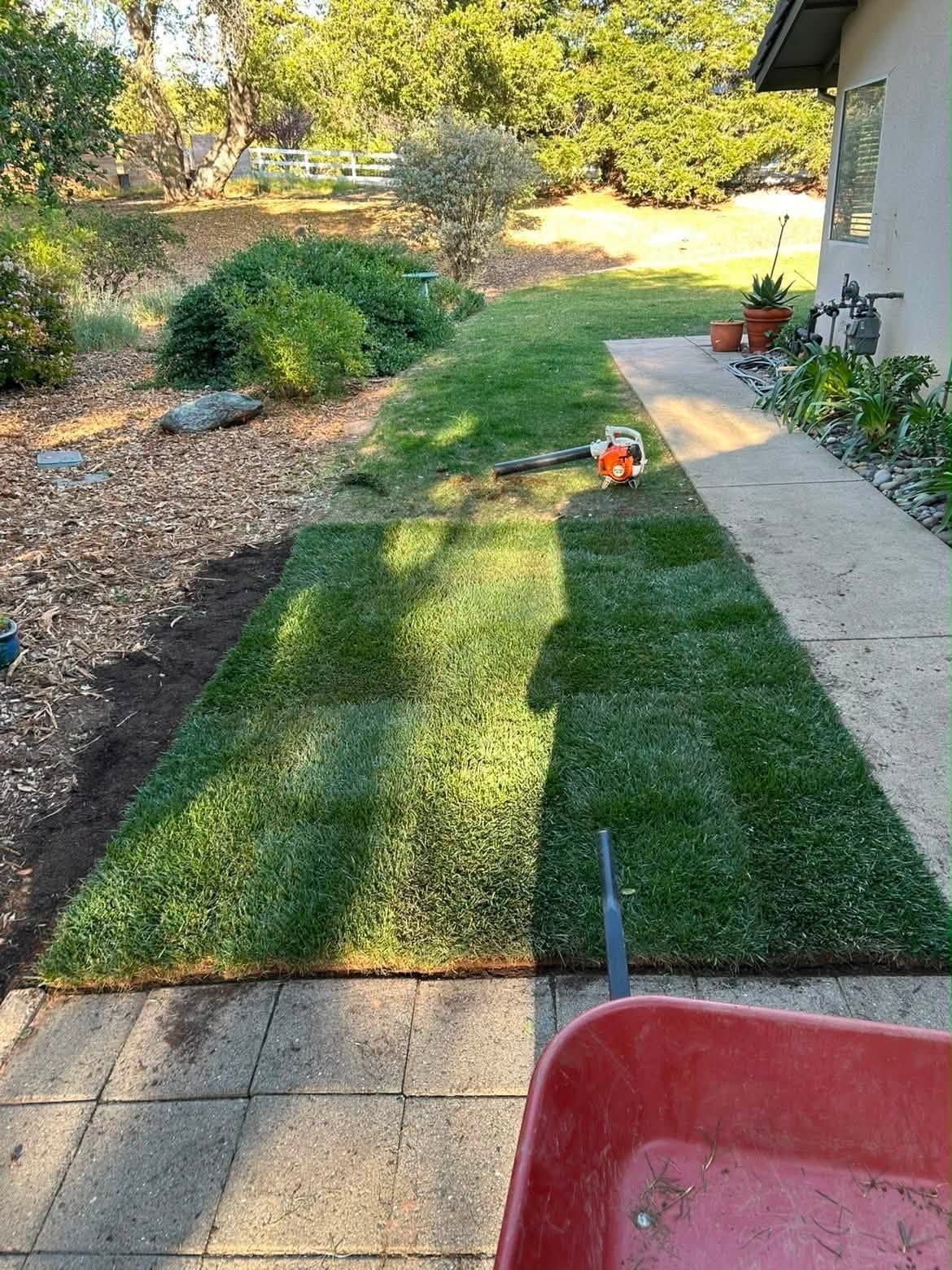
Why Soil Prep Determines How New Sod Performs
Sod installation requires stripping the old lawn, loosening compacted soil, and grading the surface level before the sod is rolled out and seamed. The soil must be loose enough for new roots to penetrate, and the grade must drain away from structures without low spots that collect water. Both partners handle the stripping and grading themselves, backed by roughly five years of landscaping experience for one and three and a half to four years in landscaping and junk removal for the other.
After installation, you will see a level lawn with tight seams between rolls, no gaps or overlaps at the edges, and sod that is in direct contact with prepared soil rather than sitting on top of old roots or thatch. The new turf establishes faster because roots can reach soil immediately, and the lawn does not sink or heave as foot traffic resumes.
The quote covers stripping, grading, and sod installation; it does not include
irrigation repairs, soil amendments, or post-installation fertilizing unless you request those separately. Access affects the quote because tight side yards or gated backyards require more time and labor to move material and equipment.
Common Questions About This Service
Sod installation replaces a failing lawn with new turf, but the process and timeline depend on site conditions and how thoroughly the old lawn is removed.
What happens to the old lawn before new sod is laid?
The existing turf and root mat are stripped out completely, and the exposed soil is loosened and graded level so the new sod roots directly into prepared soil instead of sitting on top of compacted thatch.
How is the sod seamed to prevent gaps and overlaps?
Rolls are butted tightly together without gaps, and edges are trimmed to fit borders and curves, so the seams knit together as roots establish and no lines remain visible after the first few weeks.
Why does access to the backyard affect the installation quote in Nipomo and Arroyo Grande?
Narrow side yards, locked gates, and backyards with no direct access require the crew to carry sod and equipment through the house or over fences, which increases labor time and affects the final quote.
What should you do immediately after the sod is installed?
Water the new sod daily for the first two weeks to keep the root zone moist, avoid heavy foot traffic until roots establish, and check for dry edges or corners that may need extra irrigation.
How do you know if the soil was properly graded before the sod went down?
The finished lawn should be level without low spots where water pools, and the grade should slope gently away from structures to prevent runoff from flowing toward foundations or patios.
EDGE Enterprise also
installs sod in San Luis Obispo, Orcutt, Guadalupe, Lompoc, Arroyo Grande, and Pismo Beach. Both partners do the stripping, grading, and laying themselves, ensuring the base is built correctly before any sod is rolled out. Schedule a property visit to confirm square footage and discuss access for equipment and material delivery.