
Patios Built on Foundations That Stay Level
Hardscaping in Santa Maria for backyards with open ground that need durable outdoor living space
What separates a patio that stays flat for decades from one that sinks or shifts within two years is the base underneath. EDGE Enterprise builds patios, walkways and other hardscape features for homeowners in Santa Maria and nearby towns, with both partners doing the physical excavation, base prep and installation themselves. Single-family lots in Santa Maria and Arroyo Grande often have backyards with open ground that is ideal for a patio or walkway, but only if the base is built right from the start.
The crew excavates to the required depth, sets grade and compacts the base before any pavers or concrete go down. Each stage is checked before moving on, and materials, base depth and what is included in the price are confirmed with the customer before the work begins. Skipping proper compaction or cutting corners on base thickness is what causes pavers to settle unevenly or concrete to crack along joints.
Request a detailed estimate based on your backyard layout and intended use.
How Hardscaping Addresses Long-Term Settlement
Excavation removes unstable topsoil and organic material that would compress over time, and the base is built up in compacted layers of crushed rock that lock together under weight. Grade is set during excavation so water drains away from the house and does not pool on the finished surface.
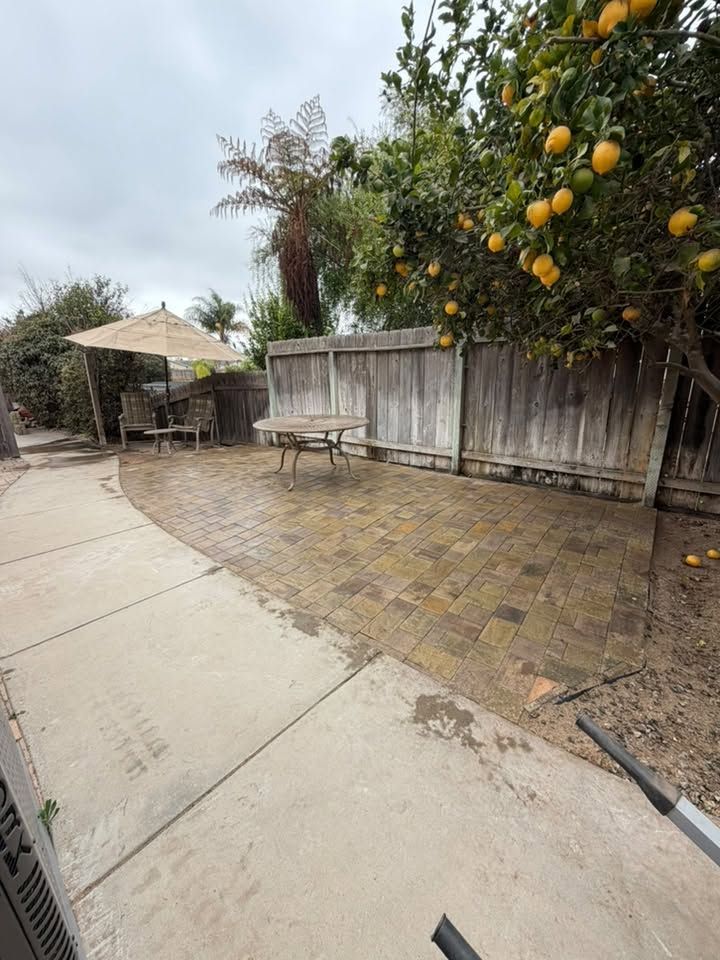
EDGE Enterprise ensures that finished patios and walkways remain level and stable even after years of foot traffic and furniture weight. You will notice that the surface stays flat without rocking pavers or sunken sections, and water runs off the edges instead of collecting in low spots or along seams.
The work includes excavation, base preparation, material installation and surface cleanup. Drainage beyond basic grading, such as french drains or catch basins, is discussed separately and priced based on what the site requires.
Answers About How the Work Is Done
Property owners in Santa Maria frequently ask about the steps involved in building hardscape that lasts and what decisions need to be made before excavation begins.
What determines how deep the crew excavates before building the base?
The depth depends on the material being installed and the soil conditions underneath. Pavers typically require six to eight inches of excavation to accommodate base rock and sand, while poured concrete may require less if the existing soil is stable and well-drained.
How is the base compacted to prevent settling?
The crew uses a plate compactor to compress each layer of base rock before adding the next, creating a dense, interlocked foundation that resists shifting under load. Skipping this step or using a hand tamper instead leaves voids that collapse over time.
What happens if the ground slopes toward the house?
The crew adjusts the grade during excavation so the finished surface slopes away from the foundation, typically at a rate of one-quarter inch per foot, which directs runoff toward the yard or a drainage point without creating a noticeable tilt.
Why do some patios develop gaps between pavers after a few years?
Gaps appear when the base was not compacted properly or when sand was used without a stable base underneath. Properly compacted base rock prevents pavers from sinking unevenly and opening up seams.
How does the crew confirm the layout before digging?
The layout is marked with stakes and string or spray paint so you can see the exact footprint, and any adjustments to size, shape or placement are made before excavation starts.
EDGE Enterprise also
builds patios and walkways in Orcutt, Guadalupe, Lompoc, Arroyo Grande and Pismo Beach. Schedule a property evaluation to review your site conditions and confirm the approach that fits your yard.